

Understanding Modern Japan Through Immigrants’ Lives & Perspectives. Explore Understanding Modern Japan Through Immigrants’ Lives & Perspectives. Discover how diverse voices shape Japan today in simple, relatable stories.
Historical Context of Immigration in Japan
Japan’s immigration landscape has undergone significant transformations over the past few decades. Post-World War II, Japan experienced economic revitalization, which attracted a multitude of foreign workers. Initially, the majority of immigrants were from neighboring Asian countries such as Korea, China, & the Philippines. Be that as it may, as Japan became more economically stable, the country opened its border for skilled workers & laborers. The late 20th century witnessed a boom in foreign talent as Japan struggled with a declining birthrate & an aging population. This shift has laid the groundwork for a diverse immigrant community that now plays a crucial role in shaping modern Japanese society.
Key statistics of immigrants in Japan
| Year | Population of Immigrants |
|---|---|
| 2000 | 1.8 million |
| 2010 | 2.3 million |
| 2020 | 2.89 million |
Life Experiences of Immigrants in Japan
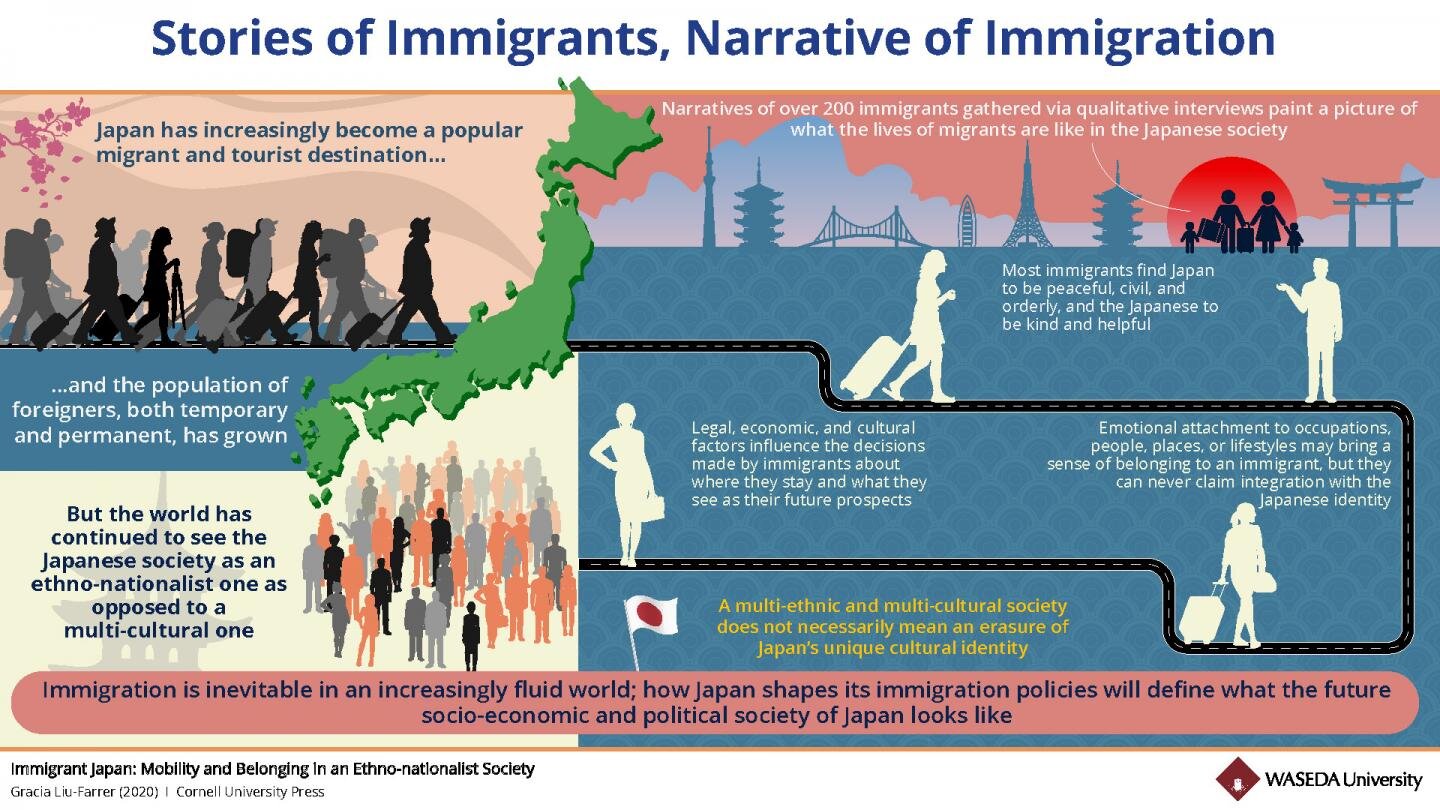
Immigrants face a unique set of challenges as they adapt to life in Japan. Their experiences can vary widely based on factors such as nationality, gender, & social class. Many newcomers find themselves navigating cultural barriers, as traditional Japanese values often contrast sharply with their own. Language remains a significant hurdle, making it challenging for immigrants to access services & engage with the local community. Despite these obstacles, many immigrants build vibrant lives across Japan, contributing to the economy & cultural richness of the nation.
Common challenges faced by immigrants
- Language barrier hindering communication
- Discrimination or social exclusion from local communities
- Difficulty in securing employment due to visa regulations
- Navigating housing laws & finding affordable accommodation
Perspectives on Cultural Integration
Integrating into Japanese society can be an enriching yet challenging process for immigrants. Many strive to embrace Japanese culture while preserving their own traditions. Festivals, cuisine, & social customs often serve as points of connection & interchange. Be that as it may, resistance from locals can occur, stemming from a fear of losing cultural identity or competition in the job market. Immigrant perspectives indicate that successful integration often hinges on mutual respect & active participation in the local culture, as they seek to find a balance between assimilation & cultural expression.
Initiatives that foster cultural exchange
- Language schools & classes offered for foreigners
- Community events promoting multiculturalism
- Workshops focusing on shared traditions, such as cooking
- Public forums for discussing immigration topics
Impact on the Economy
The contribution of immigrants to the Japanese economy is undeniable. As industries face labor shortages, professionals from overseas provide essential skills that boost productivity. Sectors such as healthcare, technology, & agriculture increasingly rely on foreign workers to fill critical gaps. In addition to labor, immigrants also contribute to the economy through entrepreneurship & consumption. Their diverse tastes & preferences help shape local markets, driving innovation & economic dynamism.
Statistics on economic contributions
| Sector | Percentage of Workers Who Are Immigrants |
|---|---|
| Manufacturing | 30% |
| Healthcare | 25% |
| Construction | 40% |
Social Dynamics & Community Building
The presence of immigrants in Japan has led to the formation of new social dynamics. Various communities have emerged, often centered around shared cultural identities. These groups play a significant role in providing support systems, as newcomers can find solace & solidarity within their communities. Events organized by these cultural associations foster understanding among diverse populations, contributing positively to social cohesion. Engagement in local neighborhoods helps break down stereotypes & promotes a sense of belonging.
Examples of successful community organizations
- Filipino Migrant Center providing resources for Filipino workers
- The Chinese Community Association focusing on cultural preservation
- South American Cultural Groups celebrating festivals together
- The International Community Center promoting multilingual services
Personal Narratives & Testimonials
Personal stories from immigrants illustrate the profound impact their journeys have on their lives & the lives of those around them. Experiences vary widely, showcasing a tapestry of triumphs & struggles. From stories of hardship & resilience to accounts of success & community engagement, these narratives highlight the diverse fabric of Japan’s immigrant population. Testimonials serve not only as powerful reflections on personal growth but also as critical insights into the evolving nature of modern Japanese society.
“To truly understand Japan, one must listen to the stories of its immigrants. They offer a perspective that enriches the national narrative.” – Andres Ullrich
Highlighting individual stories
- A Vietnamese woman overcoming language barriers to start a business
- A Brazilian family celebrating Japanese festivals while maintaining their heritage
- A refugee adapting & contributing to local schools
- Young professionals integrating into tech hubs
Government Policies & Their Effects
Japanese immigration policies have significantly influenced the dynamics of the immigrant community. The government has implemented various programs aimed at attracting skilled workers while attempting to address public concerns regarding job security & cultural preservation. Recent policy shifts, including the introduction of the specified skills visa, signal a recognition of the vital role that immigrants play in addressing labor shortages. Be that as it may, these policies have also faced criticism for being overly restrictive or inconsistent, affecting the immigrant experience significantly.
Key policies affecting immigration
| Policy | Description |
|---|---|
| Specified Skills Visa | Aims to attract skilled labor across various sectors |
| Technical Intern Training Program | Provides hands-on training for foreign workers |
| Work Permit for Foreign Students | Allows part-time employment for international students |
Shifts in Public Perception
The public perception of immigrants in Japan has evolved considerably over recent years. While historically, many harbored xenophobic sentiments, the changing demographics have begun to foster more acceptance & openness among the populace. Increased visibility of immigrant contributions to society, whether through economic roles or cultural engagement, has also reshaped attitudes. Media representation, community interactions, & educational initiatives play key roles in this evolving perception, creating more positive narratives around immigration.
Factors influencing public sentiment
- Media coverage showcasing immigrant success stories
- Increased diversity in neighborhoods
- Engagement in local cultural events
- Educational outreach on the benefits of immigration
Future of Immigration in Japan
The future trajectory of immigration in Japan remains uncertain but promising. As the nation grapples with demographic changes, the necessity for foreign workers will likely increase. Innovative policies addressing both the challenges of integration & the need for labor will shape the immigrant experience. Active participation from both immigrants & the local populace stands crucial to fostering a cohesive society that reflects the values of inclusiveness & diversity.
Potential changes on the horizon
- Increased language & cultural training initiatives
- Expanded avenues for legal immigration
- Enhanced support systems for families of immigrants
- Greater emphasis on building inclusive communities

Understanding Modern Japan Through Immigrants’ Lives & Perspectives
Japan, known for its rich cultural heritage & technological prowess, has also become a fertile ground for diverse immigrant experiences. Through the lens of these lives, one can gain valuable insights into contemporary Japanese society & its evolution. Exploring the stories, challenges, & triumphs of various immigrant groups lets us appreciate how they shape & reshape Japan’s identity.
Historical Context of Immigration in Japan
The history of immigration in Japan dates back centuries, but significant shifts occurred in the late 20th century. Initially, Japan was an ethnically homogeneous society, but globalization & economic needs prompted changes in immigration policies. In light of Japan’s aging population & labor shortages, the government began to recognize the necessity of foreign workers. The arrival of immigrants from countries such as Brazil, Peru, & more recently, Vietnam & the Philippines, has brought diverse contributions, particularly in fields like manufacturing & caregiving. The historical perspective helps illuminate current societal attitudes towards foreigners & highlights the ebb & flow of migration patterns influenced by socio-economic factors.
| Era | Key Events |
|---|---|
| Late 19th Century | First wave of foreign workers, primarily from Korea & China. |
| Post WWII | Increase in Nikkei (Japanese descendants) returning to Japan. |
| 1990s | Legal changes allowing more foreign workers to enter. |
| Present Day | Broader acceptance & need for immigrant labor. |
Immigrant Communities & Cultural Contributions
Each immigrant community adds its own flavor to the cultural landscape of Japan. For instance, Brazilian-Japanese communities have established a fusion of Brazilian culture & traditional Japanese customs. Festivals, food, & art have seen enriching influences, resulting in a multicultural phenomenon that can be particularly observed in urban areas such as São Paulo-like Nagoya. Likewise, Vietnamese immigrants have introduced their culinary delights, leading to the popularity of pho & banh mi in Japanese cities. This cultural exchange fosters a richer, more dynamic society & invites traditional Japanese citizens to engage with new ideas & practices.
- Brazilian-Japanese fusion traditions
- Prominence of Vietnamese cuisine
- Local festivals celebrating diversity
Social Challenges Faced by Immigrants in Japan
<pAlthough opportunities abound, many immigrants in Japan confront substantial barriers. Some experience hardships regarding language, employment, & social integration. Learning Japanese is often a significant hurdle, leading to limitations in securing well-paying jobs or truly participating in community life. Instances of discrimination have also been reported, affecting how these populations are viewed & treated within society. Efforts by non-profits & community organizations seek to advocate for immigrant rights, yet challenges persist. Evaluating these societal hurdles is crucial for understanding how immigrants strive for a better life & contribute to the economy, even as they navigate through various forms of adversity.
| Challenge | Impact |
|---|---|
| Language Barrier | Restricts job opportunities & social interaction. |
| Workplace Discrimination | Limits career growth & development. |
| Access to Services | Complicated by unfamiliarity with systems & culture. |
Perspectives from Immigrant Voices
Listening to immigrants’ perspectives provides a fuller picture of life in Japan. Various platforms, from podcasts to direct interviews, reflect their narratives, showcasing resilience & adaptability. Many recount stories of leaving familiar surroundings with dreams of better opportunities, only to face unexpected struggles. For instance, a Vietnamese baker may express pride in opening a shop while also sharing experiences of navigating bureaucratic red tape. These voices often emphasize the necessity of understanding & empathy from the local population, which can foster a more inclusive society. Attributes such as community support & shared experiences are central themes in their storytelling.
“To grasp Understanding Modern Japan Through Immigrants’ Lives & Perspectives, one must listen to the stories of those who experience life on the fringes of society.” – Federico Barrows
Policy Changes & Future Directions
Policy transformation is vital for creating a more inclusive environment for immigrants in Japan. Recent initiatives have aimed at easing immigration processes & acknowledging the cultural contributions of foreigners. Strategies like the Specified Skills Visa established pathways for foreign workers in sectors facing labor shortages. Government agencies are increasingly recognizing the role immigrants play in sustaining Japan’s economy. And another thing, community education programs, intercultural training, & public campaigns serve to foster empathy & understanding among citizens. These shifts, while challenging, represent steps toward a more integrated society that values diversity.
- The Specified Skills Visa’s impact on labor shortages
- Educational initiatives focusing on intercultural training
- Public campaigns advocating for inclusivity
The Role of Technology in Supporting Immigrant Lives
Technology plays a significant role in bridging the gap between immigrant communities & Japanese society. Mobile applications, social media groups, & online platforms serve as important resources for information, support, & connection. These tools can help immigrants navigate practical challenges, such as housing & job search, while also providing platforms for cultural exchange. Language-learning apps have become popular among immigrants, assisting them in mastering Japanese more effectively. Through these tech-driven solutions, immigrants can foster relationships with locals & integrate into their new environment.
| Technology Aid | Benefit |
|---|---|
| Language Learning Apps | Facilitates language acquisition. |
| Social Media Groups | Cultivates community support & resource sharing. |
| Job Search Platforms | Enhances access to employment opportunities. |
Personal Stories Reflecting Immigrant Experiences
Through personal anecdotes, one can witness the profound impact of immigrants’ lives across Japan. A Brazilian man recounts his journey from a rural town in Brazil to managing a restaurant in Osaka, sharing both successes & challenges in acquiring Japanese culinary knowledge. A Filipino woman narrates leaving her family behind to offer a better life, finding strength & resilience in a close-knit community. These narratives serve as powerful reminders of the human aspect behind statistics, highlighting individual dreams, aspirations, & the hard work that accompanies adaptation to a new culture.
My Encounter with Immigrant Culture in Japan
During my time in Japan, I had the honor of meeting various individuals from different backgrounds. One afternoon, I visited a local festival where I tasted food from various immigrant vendors. As I conversed with them, their stories resonated deeply. I learned about their hopes & fears, revealing a shared human experience despite cultural differences. This moment solidified my appreciation for the Understanding Modern Japan Through Immigrants’ Lives & Perspectives, emphasizing that our diverse experiences collectively enrich society.
What are the key factors influencing immigrant lives in modern Japan?
Key factors include cultural adaptation, legal status, economic opportunities, language barriers, & social integration. These elements shape the experiences of immigrants navigating life in Japan.
How do immigrants contribute to Japanese society?
Immigrants contribute by filling labor shortages, bringing diverse perspectives, & enriching cultural exchanges. Their participation enriches communities & fosters economic growth.
What challenges do immigrants face in Japan?
Challenges include discrimination, difficulty accessing services, & limited job prospects. Language barriers & cultural differences can also create obstacles to integration.
How does the Japanese government approach immigration?
The Japanese government has implemented various policies to manage immigration, balancing labor needs with social concerns. Recent reforms aim to attract skilled workers while addressing public sentiment.
What role does language play in the lives of immigrants in Japan?
Language proficiency is crucial for daily interactions, employment opportunities, & building relationships. It significantly affects the ability to integrate & access resources.
What are common misconceptions about immigrants in Japan?
Common misconceptions include stereotypes about immigrants being a burden on society or lacking integration efforts. In reality, many are actively engaged in their communities & contribute positively.
How do cultural backgrounds influence the immigrant experience in Japan?
Cultural backgrounds can affect adaptation strategies, social networks, & personal expectations. Familiarity with Japanese culture may ease transitions, while cultural differences can pose unique challenges.
What community support systems are available for immigrants in Japan?
Support systems include community organizations, language classes, & cultural exchange programs. These resources help immigrants connect with others & navigate daily life in Japan.
How can understanding immigrant perspectives benefit Japanese society?
Understanding immigrant perspectives fosters empathy, reduces prejudice, & encourages inclusive policies. It can strengthen social cohesion & promote a more harmonious multicultural society.
What impact has COVID-19 had on immigrant communities in Japan?
The pandemic has intensified challenges for immigrant communities, including job losses & health risks. It highlighted vulnerabilities but also spurred solidarity & community support initiatives.
Conclusion
Grasping modern Japan means listening to the stories of its immigrants. Their experiences give us insight into societal shifts & challenges in this vibrant country. From cultural exchanges to daily struggles, these narratives shape our view of Japan today. By connecting with these diverse voices, we see a more complete picture of what life is like in Japan now. Celebrating these different backgrounds helps create a richer community, where everyone’s story matters. As we learn from one another, we can appreciate the unique blend of traditions that makes Japan special & welcoming for all.
