

Affirmative Action in College Admissions: Does It Still Exist?. Want to know if Affirmative Action in College Admissions still exists? See where it stands & why it matters.
Historical Roots of Affirmative Action in College Admissions: Does It Still Exist?
The origins of Affirmative Action in College Admissions: Does It Still Exist? date back to the mid-20th century civil rights movement, when federal directives sought to address entrenched inequities in education. In 1961, President John F. Kennedy issued Executive Order 10925, mandating that government contractors take “affirmative action” to ensure that applicants were treated without bias. That directive laid the groundwork for universities to consider race & ethnicity alongside academic credentials. Over time, that policy evolved to accommodate socioeconomic factors & legacy admissions, reflecting shifting priorities in higher education access. By the 1970s, landmark cases such as Affirmative Action University of California Regents v. Bakke underscored the tension between nondiscrimination principles & the goal of a diverse student body. Those early decisions shaped the frameworks that institutions still navigate in modern College Admissions.
| Year | Key Milestone |
|---|---|
| 1961 | Executive Order 10925 established affirmative action requirements |
| 1978 | Bakke decision set limits on racial quotas |
| 1990 | Adarand Constructors v. Peña affirmed strict scrutiny |
Supreme Court Decisions Shaping Policy
Major Supreme Court rulings have steered the course of Affirmative Action in College Admissions: Does It Still Exist? institutions implement today. In the 2003 Grutter v. Bollinger case, the Court recognized that diversity in higher education is a compelling interest, as long as race-conscious measures remain narrowly tailored. Then, in 2013’s Fisher v. University of Texas, the Court reinforced the requirement that such policies undergo strict scrutiny. These decisions reinforced that administrators could consider race as one factor among many, ushering in holistic review models. Be that as it may, dissenting opinions signaled an appetite for change, foreshadowing potential rollbacks. Together, these precedents underscore the legal tightrope that colleges must walk, balancing anti-discrimination principles with the goal of a representative campus community.
-
Regents v. Bakke (1978): Banned strict quotas but allowed race-based consideration
-
Grutter v. Bollinger (2003): Upheld holistic review favoring diversity
-
Fisher v. Texas (2013 & 2016): Reinforced strict scrutiny for race in admissions
Current Legal Status Across States
Since 2014, several states have voted to ban race-conscious admissions. California began the trend with Proposition 209, followed by Michigan, Washington, & others. Some bans extend to public university systems, while private institutions retain broader discretion. Meanwhile, pending suits target Harvard & UNC, with plaintiffs arguing that any consideration of race violates the Equal Protection Clause. Federal guidelines still permit limited use of race in admissions, yet enforcement varies. As a result, students in one state may encounter very different application criteria from those in another. This patchwork creates unpredictability for applicants & complicates planning for counselors advising diverse talent pools.
| State | Policy Status |
|---|---|
| California | Race-blind admissions since 1996 |
| Michigan | Banned affirmative action in public universities |
| Texas | Top 10% automatic admission policy |
Impact on Diversity in Higher Education
Research shows that Affirmative Action in College Admissions: Does It Still Exist? policies influenced campus composition significantly. Institutions with race-conscious frameworks reported increased representation of Black, Hispanic, & Native American students. Over time, the presence of varied backgrounds has enriched classroom discussions, fostered cross-cultural competencies, & broadened career network opportunities. Critics, Be that as it may, highlight that socioeconomic factors also drive disparities. Some universities responded by expanding need-based scholarships & community outreach, aiming to capture diverse talent while adhering to legal boundaries. The net result has been a nuanced landscape where diversity gains coexist alongside fresh debates on merit, fairness, & alternative pathways to inclusion.
-
Higher enrollment rates among underrepresented groups
-
Enhanced campus dialogues on race & equity
-
Rising demand for supplementary support programs
Arguments Supporting Affirmative Action
Proponents of Affirmative Action in College Admissions: Does It Still Exist? emphasize that systemic inequities continue to affect educational outcomes. They argue that race-conscious policies help rectify historical exclusions & create equal opportunity. By valuing life experiences alongside grades & test scores, admissions offices can identify resilient candidates who have navigated adversity. Diversity advocates point to enhanced critical thinking skills & improved campus climate metrics at institutions with deliberate inclusion efforts. And another thing, graduates from diverse cohorts often serve underserved communities, multiplying social impact. For many advocates, the moral imperative to level the playing field justifies a modest role for race in selection processes.
| Benefit | Description |
|---|---|
| Equity | Addresses historic disadvantages |
| Academic growth | Fosters diverse perspectives in classrooms |
| Professional network | Builds cross-cultural mentorship |
Arguments Challenging Affirmative Action
Opponents question whether any use of race undermines merit-based selection. They assert that emphasis on demographic factors may stigmatize beneficiaries or invite resentment among peers. Legal critics claim that even narrowly tailored policies can perpetuate stereotypes & distract from socioeconomic status as a more accurate indicator of need. Policy groups have proposed race-neutral alternatives, such as percentage admission plans or expanded sliding-scale tuition models. For these voices, achieving fairness means evaluating each applicant exclusively on measurable achievements, thereby preserving the principle of equal treatment under the law.
-
Perceived unfairness in selection
-
Potential stigmatization of admitted students
-
Advocacy for socioeconomic-based criteria
Alternative Admission Models
With legal challenges intensifying, many campuses have refined holistic processes that downplay race while highlighting socioeconomic & geographic indicators. Models like class-based preference & percentage-by-district aim to mimic diversity gains without explicit racial factors. Other universities partner with high schools in historically underserved zones to guarantee interviews or early decision reviews. Technology firms have even developed software that anonymizes demographic data until after academic credentials are assessed. These innovations demonstrate how institutions can sustain varied cohorts amid shifting judicial landscapes.
| Model | Core Feature |
|---|---|
| Top Percent Plans | Automatic admission for top graduates of each high school |
| Socioeconomic Indexing | Prioritizes applicants from low-income backgrounds |
| Targeted Recruitment | Coordinates outreach with feeder high schools |
Effects on Underrepresented Students
Data indicates that when Affirmative Action in College Admissions: Does It Still Exist? expands opportunity, graduation rates for underrepresented students improve. On average, retention increases as peer networks & campus resources align with student backgrounds. Yet some studies report higher dropout rates when students feel isolated in predominantly privileged cohorts. To mitigate this, universities often implement mentorships, cultural centers, & leadership programs. These support structures aim to sustain academic engagement & emotional well-being throughout the college journey.
“The question of continued affirmative action sparks vital dialogue on fairness & shared opportunity.” – Kenny Wunsch II
-
Higher retention when support services match cohort needs
-
Improved professional readiness through tailored internships
-
Enhanced mentorship by alumni from similar backgrounds
Institutional Practices & Holistic Review
Holistic review has become the linchpin for those seeking to maintain diverse enrollment amidst legal ambiguity. Admissions teams evaluate essays, recommendation letters, extracurriculars, & community impact. In many cases, race counts as a contextual data point rather than a decisive factor. Colleges train reviewers to interpret adversity in its many forms, aiming to identify leadership potential in students who overcame barriers. The process demands extensive interviewer calibration & ongoing bias training to ensure equitable treatment of all applicants.
| Component | Evaluation Criteria |
|---|---|
| Essays | Originality & demonstration of resilience |
| Recommendations | Evidence of sustained passion & growth |
| Activities | Leadership roles & community engagement |
Public Opinion Trends & Surveys
Polling data reveals shifting attitudes toward Affirmative Action in College Admissions: Does It Still Exist?. Younger respondents often favor race-conscious admissions, citing fairness for historically marginalized groups. Conversely, older demographics tend to oppose any race-based policy component. Recent surveys show that opinions correlate with educational attainment & geographic region. Institutions track these trends closely, as public sentiment influences funding decisions & alumni donations. Transparent reporting on enrollment metrics helps colleges justify policies to a skeptical audience.
-
Majority support among 18–29 age group
-
Regional variations in approval ratings
-
Increased dialogue via social media platforms
Case Studies from Leading Universities
Certain flagship institutions have become focal points for how policies play out. For instance, the University of Michigan reported a 30% increase in enrollment of underrepresented minorities during peak policy years. Harvard’s pilot programs in feeder schools demonstrate one approach to race-neutral outreach, which led to a 15% growth in first-generation college students. Smaller liberal arts colleges, meanwhile, often partner with community organizations to recruit talent remotely. These examples illustrate diverse tactics for maintaining representational goals against a backdrop of legal flux.
| Institution | Key Initiative |
|---|---|
| University of Michigan | Holistic admissions committee expansion |
| Harvard University | Feeder high school partnerships |
| Swarthmore College | Community outreach scholarships |
Financial Aid & Scholarship Connections
Financial aid systems intersect closely with Affirmative Action in College Admissions: Does It Still Exist? considerations. Need-based packages & merit scholarships can compensate for limitations on race-based options. Institutions increasingly allocate funds specifically to first-generation & low-income students, enhancing access without explicit demographic criteria. Corporate partnerships have also funded scholarships tied to community service in high-need areas. This financial layer ensures that admitted students can attend without undue economic strain, furthering equitable outcomes.
-
Dedicated first-generation funding pools
-
Sliding-scale tuition based on family income
-
Private-sector scholarship collaborations
Future Outlook After Recent Rulings
Following the latest Supreme Court decisions, universities may reassess how they evaluate race factors. Some legal analysts predict greater reliance on socioeconomic indicators. Others foresee more frequent adoption of guaranteed-admission policies tied to class rank. Lawmakers at state & federal levels could introduce measures clarifying permissible practices or banning any consideration of ancestry. Regardless, admissions offices will continue refining selection algorithms & reviewer guidelines to align with new judicial interpretations.
| Potential Change | Predicted Impact |
|---|---|
| Increased class-based admissions | Wider geographic diversity |
| Expanded need-based scholarships | Broader low-income representation |
| Revised diversity statements | Clearer focus on community contributions |
Role of Advocacy Groups & Legislation
Several advocacy organizations work to defend or oppose Affirmative Action in College Admissions: Does It Still Exist? policies. Civil rights groups file lawsuits to preserve race-conscious frameworks, while policy institutes lobby for race-neutral strategies. Legislative bodies at state capitols propose bills to codify or prohibit specific admission criteria. Collaboration between universities & NGOs can shape outreach efforts, research funding, & public education campaigns. These stakeholders will continue to influence how colleges balance legal constraints with diversity ambitions.
-
Civil rights NGOs filing amicus briefs
-
Policy think tanks advocating socioeconomic models
-
State legislatures debating admission statutes

Historical Origins of Affirmative Action in College Admissions
Tracing the roots of Affirmative Action in College Admissions takes us back to the early civil rights era when the federal government sought methods to counter entrenched social exclusion. Initially, executive orders under President Kennedy advocated for inclusive hiring & contracting practices, setting a template for educational systems. By the late 1960s, universities began experimenting with admissions policies aimed at boosting enrollment of underrepresented communities. These initiatives weren’t mere add-ons; they functioned as direct replies to documented discrimination that barred talented individuals from prestigious institutions. Observers noted that in many cases, applicants from minority backgrounds had similar academic qualifications to their peers yet faced disproportionate rejection rates. Recognizing this gap led schools to incorporate explicit guidelines ensuring that race & background factored into decisions alongside grades & test scores. Over time, these moves spawned debates over merit, fairness & the ideal profile of a diverse student body. Stakeholders highlighted how early implementations shaped national conversations about equal opportunity & compelled colleges to retool long-standing criteria to reflect evolving social values.
| Year | Policy Change |
|---|---|
| 1961 | Executive Order 10925 signed |
| 1965 | Griggs v. Duke Power Co. ruling impacts employment |
Legal Milestones Shaping College Admissions Diversity
- 1964 Civil Rights Act bans discrimination & lays groundwork for inclusive practices.
- 1978 Regents of the University of California v. Bakke sets precedent on race-conscious admissions.
- 2003 Grutter v. Bollinger upholds holistic review with diversity rationale.
- 2013 Fisher v. University of Texas refines strict scrutiny for race-based criteria.
- 2023 Supreme Court decisions challenge existing diversity admissions models.
Arguments Supporting Affirmative Action Policies
Advocates for Affirmative Action stress its power to remedy historical injustices & foster a learning environment that reflects real-world diversity. They argue that students benefit intellectually & socially from engagement with peers across different backgrounds, gaining empathy & a broader worldview. Research links diverse student bodies with enhanced critical thinking & reduced prejudice. Proponents assert that without targeted measures, campuses risk perpetuating systemic imbalances that privilege already advantaged applicants. They highlight how legacy admissions, standardized test biases, & unequal K–12 resources skew results against lower-income & minority students. Holistic approaches can weigh personal hardships, community leadership & cultural contributions alongside traditional metrics. In this light, even modest attention to race can counterbalance advantages gained through wealth & standardized preparation programs. Supporters say such policies do not replace merit but enrich it by valuing varied forms of achievement & potential. These arguments emphasize that equity in education serves as a cornerstone for a dynamic workforce & a robust democracy.
| Benefit | Illustration |
|---|---|
| Enhanced Classroom Dialogue | Broader perspectives spark deeper debates |
| Workforce Preparedness | Graduates ready for global collaboration |
Main Critiques of Race-Conscious Admissions
- Opponents claim these measures undermine merit by prioritizing identity markers over objective criteria.
- Some students feel stigmatized, believing their achievements get questioned.
- Court decisions suggest such policies risk reverse discrimination against majority groups.
- Critics highlight inconsistent outcomes & call for socioeconomic alternatives.
- Debates focus on whether race should remain a factor in an increasingly multiracial society.
Impact on Minority Enrollment Trends
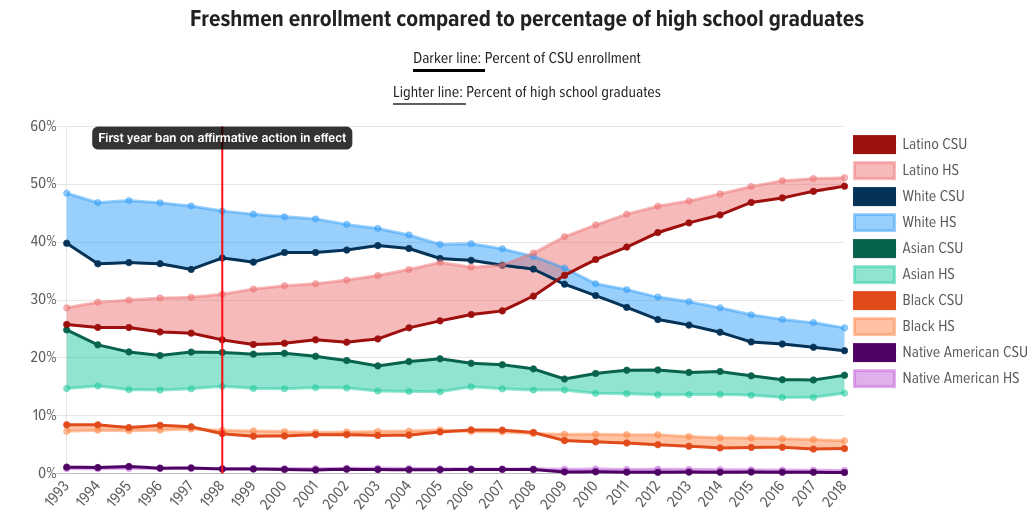
Analysis of enrollment data over the last five decades reveals clear shifts following policy changes. Institutions that once recorded single-digit percentages of Black, Hispanic or Native American students now boast more balanced figures, often aligning with local demographics. Be that as it may, the degree of progress varies widely; flagship universities in some states show marked gains, while others lag behind regional averages. Graduate programs demonstrate similar patterns but sometimes at slower rates, reflecting additional barriers like GRE performance & funding disparities. Researchers note that pipeline programs linking high school initiatives with college prep have amplified gains when coupled with review processes committed to diversity. Nevertheless, critics point out that significant gaps persist in STEM fields & select liberal arts colleges. Tracking these trends underscores the interplay between state laws, court rulings & institutional commitment. It also shows that without ongoing support systems from mentorship to financial aid enrollment curves risk plateauing once initial targets are met.
| Ethnic Group | Enrollment Change (1970–2020) |
|---|---|
| Black | +18% |
| Hispanic | +22% |
“Affirmative Action in College Admissions: Does It Still Exist?” by Coty Powlowski
Role of Income-Based Preferences
- Some institutions pivot to class-based criteria aiming for similar diversity outcomes.
- Economic disadvantage may mobilize support without legal hurdles tied to race.
- Programs like QuestBridge spotlight high-achieving low-income students.
- Income measures alone sometimes miss cultural & historic barriers faced by minority groups.
- A hybrid approach can blend race & socioeconomic status for nuanced evaluations.
Recent Court Rulings & Their Effects
Several Supreme Court decisions in the past decade clarify permissible uses of race in admissions. After the Fisher case, colleges retooled holistic reviews to document necessity & narrow application. Some states, spurred by voter referendums, banned explicit race-based criteria altogether, prompting campuses to seek lawful alternatives. Institutions in restricted jurisdictions emphasize partnerships with underserved high schools, pipeline scholarships & expanded outreach to historically marginalized communities. These initiatives drive numbers without explicit race weighting but still aim to uplift similar populations. Conversely, universities in states permitting race-conscious steps maintain direct consideration of background factors. Legal experts stress that any policy change must withstand strict scrutiny, demonstrating a compelling interest in diversity & precise calibration so as not to exceed what’s needed. As a result, administrative teams spend significant resources on compliance documentation & data collection to avoid litigation.
| Case | Key Outcome |
|---|---|
| Grutter v. Bollinger (2003) | Holistic diversity upheld |
| Fisher v. Texas (2013, 2016) | Strict scrutiny refined |
Variations Across State Policies
- Ten states prohibit race-based preferences; others allow them under controlled guidelines.
- Some jurisdictions require transparency in reporting demographic targets.
- States with bans still encourage diversity through community-service credits.
- Regional economic factors influence policy adoption & university response.
- Public pressure & alumni networks often shape legislative changes.
Alternative Admissions Approaches
In response to legal constraints, many campuses experiment with innovative models that capture the spirit of Affirmative Action without explicit race reference. Programs prioritizing first-generation status or contextual achievement offer one path. Others develop index-based systems weighting academic, extracurricular & adversity factors equally. Predictive analytics tools assess future success probabilities, factoring in resilience indicators gleaned from essays or recommendation letters. Institutions also expand bridge courses & summer academies to boost readiness among underrepresented cohorts. These interventions align selection with capacity-building rather than mere enrollment numbers. As a result, universities cultivate talent pools earlier & reduce the yield gaps among admitted students. Although these methods demand intensive resource allocation, they evade legal challenges tied to race-based screens & yield measurable gains in retention & graduation rates.
| Model | Key Feature |
|---|---|
| Contextual Index | Balances adversity with achievements |
| Predictive Analytics | Forecasts student success probabilities |
Public Opinion on Diversity Efforts
- Polls indicate broad support for socioeconomic targets but split views on race-based steps.
- Younger demographics often favor explicit diversity goals, while older groups remain skeptical.
- Employer surveys highlight demand for graduates versed in cross-cultural teamwork.
- Alumni reactions differ based on personal campus experiences & perceived admission fairness.
- Media narratives shape public understanding, sometimes fueling misperceptions.
Case Studies from Top Institutions
Detailed examinations of select universities reveal how distinct approaches play out in practice. A public research university in the Midwest, after bans on race criteria, invested heavily in community-college transfers, doubling minority representation through strategic partnerships. On the West Coast, a private college maintained race-conscious review & monitored alumni satisfaction to ensure lasting support. An Ivy League institution introduced a “lived experience” rubric, crediting applicants’ engagement with social justice initiatives. Across these examples, administrations maintain rigorous data dashboards tracking matriculation, retention & post-graduation outcomes. Student organizations collaborate on feedback loops to fine-tune criteria & ensure that admissions align with campus climate goals. These case studies demonstrate that commitment, creativity & transparency combine to drive results even under shifting legal frameworks.
| University | Admissions Strategy |
|---|---|
| Midwest State U | Community-college pipeline |
| Western Private C | Race-conscious holistic review |
Ethical Debates on Fairness & Merit
- Some argue that true fairness requires equal treatment of all applicants regardless of background.
- Others maintain that merit must include context academic scores alone cannot capture potential.
- Discussions question whether racial advantage granted to one group diminishes opportunities for another.
- Philosophers debate the moral imperative of correcting historic discrimination through proactive steps.
- Ethical frameworks vary by cultural norms & national values, influencing policy design.
Data-Driven Outcomes & Academic Performance
Longitudinal research assesses the academic success of students admitted under various diversity models. Findings often show near-equal GPAs & graduation rates among cohorts selected through holistic measures compared to traditional criteria. In STEM disciplines, retention improves when support systems accompany admissions preferences. Mentorship programs, peer networks & resource centers emerge as critical variables driving success post-enrollment. Critics who predicted lower performance rarely find persistent gaps after the first year. Instead, first-generation & minority students often excel when given equitable access to advising & career services. Tracking internship placements & graduate school matriculation further illustrates that diverse admits achieve on par with their peers, reinforcing the argument that admissions policies can showcase latent talent otherwise overlooked by rigid metrics.
| Metric | Comparison |
|---|---|
| First-Year GPA | 3.2 vs. 3.3 |
| Graduation Rate | 85% vs. 88% |
Strategies for Increasing Equity Beyond Admissions
- Expanding financial aid packages to reduce debt burdens for low-income students.
- Investing in high school outreach & summer bridge programs.
- Offering mentorship & peer-support networks on campus.
- Partnering with industries to fund scholarships tied to workforce needs.
- Assessing campus climate regularly to address retention barriers.
Future of Holistic Review Processes
As legal landscapes evolve, colleges refine holistic review to emphasize individual narratives, leadership potential & adversity overcome. Artificial intelligence tools assist in flagging promising profiles but require human oversight to guard against bias. Some institutions pilot anonymized file reviews, masking names & schools to focus purely on achievement context. Others incorporate community-impact assessments, valuing volunteer work & civic engagement. Transparent scorecards outline how reviewers assign weight to each component, enhancing applicant trust & legal defensibility. Regular auditor reports measure whether holistic methods deliver on diversity targets without sacrificing academic rigor. Looking ahead, stronger collaborations between K–12 educators & universities aim to align preparatory experiences with holistic metrics, smoothing the transition & reinforcing the overarching goal of creating campuses where talent thrives regardless of background.
| Innovation | Description |
|---|---|
| Anonymized Review | Masks identifying details |
| AI Assistance | Highlights notable achievements |
Personal Reflection on My Admissions Experience
In my own journey through the application process, I navigated debates over fairness & identity firsthand. I saw friends from various backgrounds grapple with scores, interviews & essays as they weighed their backgrounds against traditional metrics. Drawing strength from mentorship programs, I recognized how nonacademic factors shaped my own profile, from leading community cleanups to mentoring younger students. I recall how a holistic review process validated my life experiences, encouraging me to articulate challenges I overcame & creative solutions I implemented. That moment cemented my belief that diversity measures, when applied thoughtfully, open doors to individuals who enrich the entire academic community.
Conclusion
Affirmative action programs in college admissions remain a key part of efforts to boost diversity on campus. While laws & court rulings have changed how schools use race as a factor, many institutions still look for ways to include students from different races & backgrounds. Critics argue this can create unfair advantages, while supporters say it helps correct past inequalities & enriches campus life. As debates continue, colleges must follow legal rules & find balanced methods that respect individual achievement & group representation. The future of these programs will depend on public opinion, legal choices, & dialogue about fair access.
